Destination · Palar valley
Kanchipuram
Tamil Nadu · A day trip from Chennai covers three or four temples; two days covers the town.
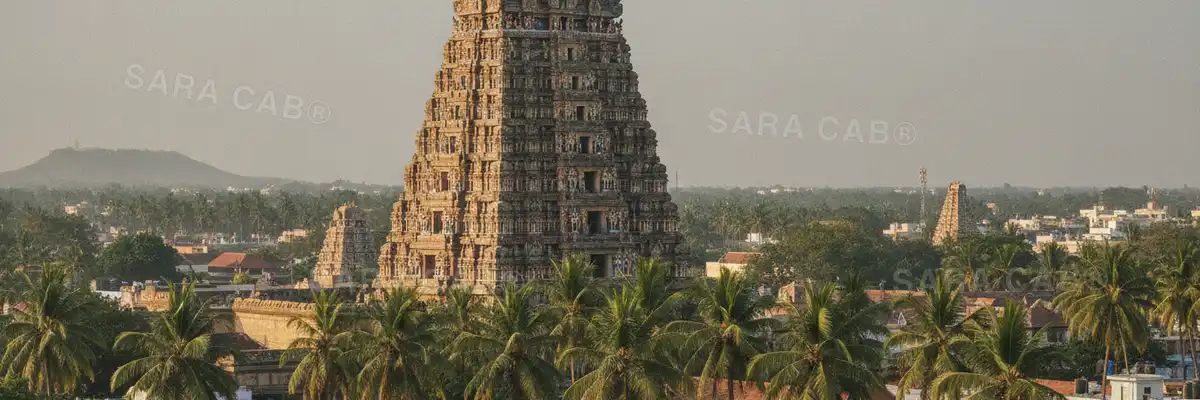
About Kanchipuram
Kanchipuram was a capital of the Pallavas and later the Cholas and Vijayanagara, and it has been a temple city for well over a thousand years. The Kailasanathar temple is the oldest surviving structure, built in sandstone in the early eighth century and quite different in feel from the vast later complexes.
The practical thing to understand is that the temples are spread across the town rather than clustered, and that most close for several hours around the middle of the day. Those two facts together decide the shape of a visit far more than the distance from Chennai does.
The silk is the other half of the town's identity. Kanchipuram weaving is a distinct tradition with its own techniques, and the cooperatives on the edge of town are open through the midday hours when the temples are not — which is why they fit the day so neatly.
Staying there
Most groups visit from Chennai as a day trip rather than staying, since it is around two hours away. Accommodation in the town is functional rather than a destination in itself.
If you are combining Kanchipuram with Vellore or Tiruvannamalai, a night here works well and turns a rushed day into a comfortable two.
Worth your time
- Ekambareswarar temple
- Kamakshi Amman temple
- Varadaraja Perumal temple
- Kailasanathar temple
- Silk weaving cooperatives
- Vaikunta Perumal temple
| Region | Palar valley, Tamil Nadu |
|---|---|
| Best season | October to February. Temple courtyards are stone underfoot and walked barefoot. |
| Suggested stay | A day trip from Chennai covers three or four temples; two days covers the town. |
Getting there
Routes to Kanchipuram
Each route guide covers the real drive time, which seater we would send, the itinerary, permits and the questions people actually ask about that approach.
Multi-day
Circuits including Kanchipuram
What it costs
| Seater | Configuration | From, per km | Driver batta / day | Minimum / day |
|---|---|---|---|---|
| 10 Seater | 9+D — up to 9 passengers | ₹38 | ₹1,000 | 300 km |
| 13 Seater | 12+D — up to 12 passengers | ₹42 | ₹1,000 | 300 km |
| 17 Seater | 16+D — up to 16 passengers | ₹45 | ₹1,000 | 300 km |
Fares shown are indicative starting rates. The final charge is based on real-time usage — distance, hours or days, tolls, parking and permits. Outstation trips are charged on a minimum of 300 km per day. Driver batta is ₹1,000 per day; late-night batta of ₹1,000 applies between 22:00–05:59. GST at 5% applies to the total.
Questions about Kanchipuram
How many temples can we see in a day?
Three or four properly, if you start early and plan around the midday closing. Attempting all the major ones produces a group that has seen a lot of gopurams from the outside.
Why does the midday closing matter so much?
Because it removes several hours from the middle of the day, and the temples are spread across the town rather than clustered. A nine o'clock departure from Chennai typically costs you two temples.
Which temple should we prioritise?
Kailasanathar if the architecture interests you — it is the oldest, early eighth century, in sandstone, and quite different from the vast later complexes. Ekambareswarar and Varadaraja Perumal are the largest.
Can the vehicle reach the temple entrances?
Not usually. The streets around the major shrines are narrow, crowded and effectively one-way regardless of signage. The chauffeur drops at the nearest workable point and holds nearby, so expect a short walk at each.
Is the silk worth buying?
Kanchipuram weaving is a distinct tradition with its own techniques, and the cooperatives are open through the midday hours when the temples are closed — which is why they fit the day so well. Whether to buy is your business, not ours.
Do we need a permit?
No. It is in Tamil Nadu and the drive from Chennai crosses no state line. Tolls are charged at actuals against receipts.
What happens on festival days?
The town transforms — crowds swell and streets around the major temples close to vehicles entirely, pushing the drop point much further out. Still a good day, just a different one. Check the calendar and tell us.
How much walking is involved?
A short walk to each temple from where the vehicle can stop, then a good deal inside large complexes, barefoot on stone that is hot by afternoon. Tell us if anyone has difficulty walking.
Can we combine it with Vellore or Tiruvannamalai?
Vellore pairs naturally as a single full day. Tiruvannamalai is better as a two-day circuit — both in one day means arriving there with the light going.
When is the best time to visit?
October to February. It matters more than the air temperature suggests, because the temple courtyards are stone underfoot and walked barefoot.
Destination information last verified 2026-09-02.