Route · Madurai → Rameswaram
Madurai to Rameswaram by Force Urbania
170 km · 3.5 – 4 hours · 13 Seater recommended
Madurai → Rameswaram · indicative rates
Fares shown are indicative starting rates. The final charge is based on real-time usage — distance, hours or days, tolls, parking and permits. Outstation trips are charged on a minimum of 300 km per day. Driver batta is ₹1,000 per day; late-night batta of ₹1,000 applies between 22:00–05:59. GST at 5% applies to the total.
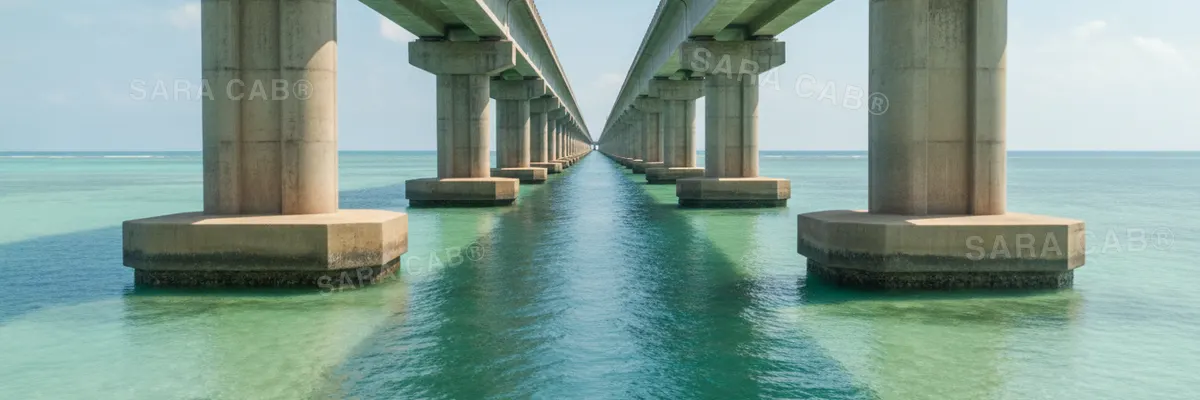
The Pamban crossing to Rameswaram island, where the road runs low over shallow turquoise water beside the old rail bridge. On a clear day it is the most striking few minutes of any route we run in the south — taken at driving pace, since stopping on the bridge is not permitted.
Quick facts
| Distance | Approximately 170 km each way |
|---|---|
| Drive time | 3.5 – 4 hours, traffic permitting |
| Recommended seater | 13 Seater (12+D) |
| Passengers | Up to 12 in the recommended vehicle |
| Luggage | Comfortable for a two-day trip; travel light if the temple is the main purpose |
| Terrain | Flat highway across the southern plain, then the sea crossing to the island |
| Ghat sections | |
| State crossings | None — stays within one state |
| Permits | No interstate permit — the route stays within Tamil Nadu throughout. |
| One-way | Available |
| Round trip | Available |
| Driver batta | ₹1,000 per day; ₹1,000 late-night (22:00–05:59) |
| Recommended departure | Before 06:00 for a day trip, so you reach the temple before the midday closing and have the afternoon for Dhanushkodi. |
Distance and drive time are indicative planning figures, not the basis of a quote. Fares are calculated on actual usage — see the rates below.
Why an Urbania for this route
Rameswaram is the anchor of the southern temple circuit and the trip most often squeezed into too little time. The drive is easy — flat highway, no ghats, nothing that demands a skilled ascent — so groups assume it is a half-day errand and discover it is not. Doing Rameswaram properly means the temple and its theerthams in the morning, and Dhanushkodi at the tip in the afternoon, and that is a full day before you have driven 170 km home.
What an Urbania adds here is less about the road and more about the day. A group of twelve doing a temple in the morning and a windswept sandspit in the afternoon wants somewhere to leave bags, shoes and wet clothes, and wants to move as one group rather than reassembling in a car park each time. The vehicle becomes the base for the day rather than merely the transport to it.
The Pamban crossing is the part everyone remembers. The road runs beside the old rail bridge over shallow turquoise water, and on a clear day it is the most striking few minutes on any of our southern routes. Stopping on the bridge is not permitted, so the view is one to take at driving pace.
Which Urbania should you choose?
The 13 seater is right for almost every group on this route. The roads are wide and flat so the 17 presents no difficulty on the drive, but Rameswaram town itself is a temple town — narrow streets, heavy foot traffic, and very limited space near the entrance — and the shorter vehicle gets meaningfully closer to where you want to be.
Luggage is rarely the constraint here unless you are staying several nights, since most groups travel light for a temple visit. If the trip is a longer southern circuit taking in Kanyakumari or Thekkady afterwards, size up: you will be carrying real luggage by then and the 13 seater fills quickly.
Suggested itinerary
- Ramanathapuram — The natural halt roughly two-thirds of the way, with space for a long vehicle.
- Pamban bridge — The sea crossing onto the island. Worth slowing for; stopping on the bridge itself is not permitted.
- Rameswaram town — The temple and the town. Vehicle access near the temple is limited.
- Dhanushkodi — The road runs out at the tip. Exposed, spectacular, and best seen with daylight to spare.
Itineraries are indicative. Actual routing, timings and stops are subject to road, weather, traffic and permit conditions, and to the chauffeur's judgement on ghat sections.
Road notes
Flat, straightforward highway the whole way, with none of the ghat driving that defines most of our southern routes. The interest is the Pamban crossing, where the road runs alongside the old rail bridge over shallow turquoise water. The final stretch to Dhanushkodi is a narrow strip with sea on both sides.
Season
The island is exposed and hot from March to June. October to February is far more comfortable. The northeast monsoon brings strong winds across the bridge, and the road to Dhanushkodi is occasionally closed in bad weather — we check before setting off rather than turning a group around at the barrier.
Getting around at Rameswaram
Keep the vehicle. Rameswaram's sights are strung out along the island rather than clustered — the temple in town, Agnitheertham on the shore, the Kalam memorial, and Dhanushkodi some twenty kilometres further out at the tip — and there is no practical way to move a group of twelve between them otherwise.
Dhanushkodi is the reason to allow a full day. The road runs out at the end of a narrow spit with sea on both sides, the light there in the late afternoon is the best of the trip, and it is a place that rewards not being rushed. Groups that arrive at four having spent the morning in traffic see it briefly and leave disappointed.
Worth seeing
- Ramanathaswamy temple
- The 22 theerthams
- Pamban bridge
- Dhanushkodi
- Agnitheertham beach
- APJ Abdul Kalam memorial
Parking
Streets around the Ramanathaswamy temple are narrow and crowded. The chauffeur drops at the nearest workable point and holds in a designated area, which may mean a short walk to the entrance.
Rates
| Seater | Configuration | From, per km | Driver batta / day | Minimum / day |
|---|---|---|---|---|
| 10 Seater | 9+D — up to 9 passengers | ₹38 | ₹1,000 | 300 km |
| 13 Seater | 12+D — up to 12 passengers | ₹42 | ₹1,000 | 300 km |
| 17 Seater | 16+D — up to 16 passengers | ₹45 | ₹1,000 | 300 km |
Fares shown are indicative starting rates. The final charge is based on real-time usage — distance, hours or days, tolls, parking and permits. Outstation trips are charged on a minimum of 300 km per day. Driver batta is ₹1,000 per day; late-night batta of ₹1,000 applies between 22:00–05:59. GST at 5% applies to the total.
Questions about this route
How long is the drive from Madurai to Rameswaram?
Around 170 km and three and a half to four hours on flat highway. There is no ghat driving on this route at all, which makes it one of the more restful long runs we do in the south — the day is long because of what you do at the other end, not because of the road.
Can we do Rameswaram as a day trip from Madurai?
You can, and it is a long day. Leaving Madurai before six gets you to the temple ahead of the midday closing and leaves the afternoon for Dhanushkodi, with the drive home in the evening. If you want to see both properly and not feel hurried, one night on the island is a much better trip.
Do we need a permit for this route?
No. Both Madurai and Rameswaram are in Tamil Nadu, so no interstate permit applies. Tolls on the Ramanathapuram highway are charged at actuals against receipts kept by the chauffeur.
Can the vehicle stop on the Pamban bridge for photographs?
No — stopping on the bridge is not permitted, and it would be unsafe in any case with the wind that crosses it. The view is taken at driving pace. There are viewpoints on the approach on either side where a long vehicle can pull in safely.
How close can the vehicle get to the temple?
Not very. The streets around the Ramanathaswamy temple are narrow, crowded and effectively one-way in practice, and a seven-metre vehicle cannot get near the entrance. The chauffeur drops at the closest workable point and holds in a designated area, which usually means a short walk.
Is Dhanushkodi worth the extra drive?
For most groups it is the highlight. The road runs out at the tip of a narrow spit with sea on both sides, and the late-afternoon light there is the best of the trip. Allow proper time for it rather than treating it as something to fit in on the way back.
Is the road to Dhanushkodi always open?
Usually, but not always. It is exposed and can close in bad weather, particularly during the northeast monsoon. We check the position before setting off rather than driving a group twenty kilometres to a barrier.
When is the best time of year to go?
October to February. The island is flat, exposed and genuinely hot from March to June, and a temple visit with a lot of walking on hot stone is hard work for older members of a group. The monsoon brings strong winds across the crossing but rarely stops the trip.
Can we combine Rameswaram with Kanyakumari?
Yes, and it makes a good two- or three-night circuit from Madurai. What does not work is doing both in a single day — they are a long way apart and the day becomes almost entirely driving. Ask us to lay out a realistic itinerary rather than compressing it.
How much walking is involved?
A fair amount. The temple corridors are long, the theerthams involve moving around the complex, and the ground is hot underfoot in the middle of the day. If anyone in the group has difficulty walking, tell us when you book — it affects where we can drop and what we would recommend attempting.
Which seater should we take?
The 13 seater for almost every group. The roads are wide and flat so the 17 drives easily, but the shorter vehicle gets meaningfully closer to the temple in a town where the last few hundred metres are the difficult part.
Should we book accommodation on the island?
If you want Dhanushkodi and the temple both done properly, yes. A night on the island turns a rushed twelve-hour day into a comfortable trip, and it means seeing the tip in evening light rather than watching the clock. We can hold the vehicle overnight and continue the next morning.
More from Madurai
Other trips out of Madurai
Madurai to Kodaikanal
120 km · 3 – 3.5 hours
Madurai to Kanyakumari
240 km · 4.5 – 5 hours
Madurai to Thekkady
150 km · 4 – 4.5 hours
Madurai to Thanjavur
190 km · 3.5 – 4 hours
Madurai to Courtallam
160 km · 3 – 3.5 hours
Also popular from Madurai
- Munnar
- Palani
We run these regularly and quote them on the phone. A route only gets a page once we have verified detail to put on it.
Plan this trip
- About Rameswaram
- All Urbania hire in Madurai
- 13 Seater — the seater we suggest
- Compare all seaters
- Full tariff
Route information last verified 2026-09-02.