Destination · High Range, Western Ghats
Munnar
Kerala · around 1600 m · Two nights minimum; three for Eravikulam, Top Station and a Kolukkumalai sunrise.
About Munnar
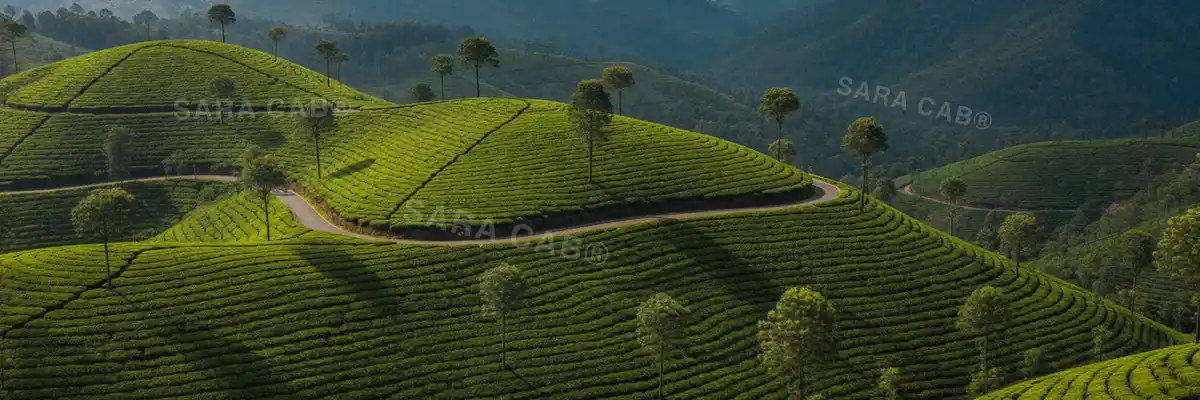
Munnar exists because of tea. Planting began in the 1870s and 1880s on land leased from the Poonjar chief, and within a few decades the high range had been reshaped into the contoured hillsides that define it now. The bushes on many slopes are over a century old and still picked by hand, which is why the plantations look manicured rather than industrial.
The altitude does the rest. At around 1,600 metres the air is thin and cool enough that Munnar keeps its colour through months when the Kerala coast below is drained by heat, and Anamudi nearby is the highest peak in South India at 2,695 metres. The shola grassland above the tea line is a distinct ecosystem and the reason Eravikulam exists at all.
That park is home to the Nilgiri tahr, a mountain goat that was down to a few hundred animals in the mid-twentieth century and now numbers in the low thousands, roughly half of them here. The park closes for part of the year while they calve — a constraint worth planning around rather than resenting, since it is the reason there is anything to see.
Staying there
Estates and resorts run well beyond the town, which is congested and has limited parking in season. Staying out among the tea is quieter, better and effectively standard — the town itself has little to recommend it beyond supplies.
It is cold at night from December to February at this altitude, which surprises groups arriving from the Kerala coast. Warm clothing is a genuine packing consideration rather than an afterthought.
Worth your time
- Tea estates and the tea museum
- Eravikulam National Park
- Mattupetty dam
- Top Station
- Anamudi, the highest peak in South India
- Kolukkumalai, reached by jeep
| Region | High Range, Western Ghats, Kerala |
|---|---|
| Altitude | Around 1600 m |
| Best season | September to March. The monsoon puts the high range in cloud for days. |
| Suggested stay | Two nights minimum; three for Eravikulam, Top Station and a Kolukkumalai sunrise. |
Getting there
Routes to Munnar
Each route guide covers the real drive time, which seater we would send, the itinerary, permits and the questions people actually ask about that approach.
Multi-day
Circuits including Munnar
What it costs
| Seater | Configuration | From, per km | Driver batta / day | Minimum / day |
|---|---|---|---|---|
| 10 Seater | 9+D — up to 9 passengers | ₹38 | ₹1,000 | 300 km |
| 13 Seater | 12+D — up to 12 passengers | ₹42 | ₹1,000 | 300 km |
| 17 Seater | 16+D — up to 16 passengers | ₹45 | ₹1,000 | 300 km |
Fares shown are indicative starting rates. The final charge is based on real-time usage — distance, hours or days, tolls, parking and permits. Outstation trips are charged on a minimum of 300 km per day. Driver batta is ₹1,000 per day; late-night batta of ₹1,000 applies between 22:00–05:59. GST at 5% applies to the total.
Questions about Munnar
How old are the tea plantations?
Planting began in the 1870s and 1880s and many bushes on the older slopes are over a century old, still picked by hand. That is why the plantations look manicured rather than industrial — they were laid out by hand and have never been mechanised.
Is Eravikulam always open?
No. It closes for part of the year during the Nilgiri tahr calving season. Groups who came specifically for it and arrive in the closed window are genuinely disappointed, and it cannot be worked around on the day.
What is special about Kolukkumalai tea?
It is grown at around 2,400 metres, which is among the highest in the world, and the factory there still processes by the original orthodox method rather than modern CTC. The tea genuinely tastes different, which is most of why people make the rough trip up.
How many days do we need?
Two nights minimum, three if you want Eravikulam, Top Station and a Kolukkumalai sunrise without rushing. One night is a lot of driving for an afternoon in a place this good.
What is the Nilgiri tahr?
A mountain goat found only in the southern Western Ghats. Numbers fell to a few hundred in the mid-twentieth century and are now in the low thousands, with roughly half of them in Eravikulam. The park's seasonal closure is for their calving.
How cold does Munnar get?
Cold enough to need a jacket at night, particularly December to February. Groups arriving from the coast or from Coimbatore consistently underpack, and it adds real luggage volume.
What is Anamudi?
At 2,695 metres it is the highest peak in South India, and it sits within the Eravikulam area near Munnar. The shola grassland around it is a distinct high-altitude ecosystem rather than simply more forest, which is what makes the park worth the visit beyond the tahr.
Is the monsoon a bad time?
It is heavy on this side of the ghats and the high range can sit in cloud for days, so views are the casualty rather than access. The tea is at its most vivid. September to March if views matter.
Can we combine Munnar with Thekkady or Alleppey?
Both work as a Kerala circuit. Thekkady is the more natural pairing and is a real drive through the hills rather than a hop. Our Kerala High Range and Backwaters circuit does Munnar, Thekkady and Alleppey in seven days.
Is the town worth staying in?
Not particularly — it is congested with limited parking in season. Staying out among the estates is quieter and better, and it makes the vehicle essential rather than merely useful.
Destination information last verified 2026-09-02.